
London Dilaps is an office dilapidations contractor in London. We price your landlord’s schedule line by line, complete the strip-out, make-good or Cat A reinstatement works, and hand the space back with landlord sign-off.
Strip-out only from £3 per sq ft. With make-good from £8 per sq ft. Heavily fitted-out space is priced after a free survey.
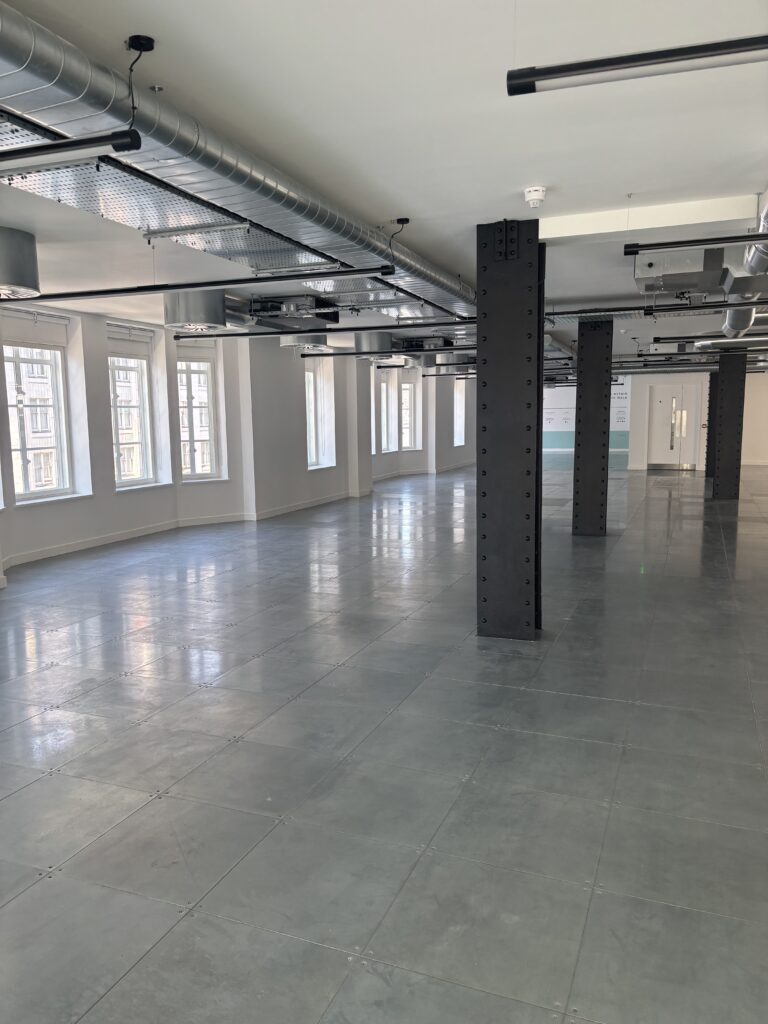
Dilapidations is one of those commercial-property words that almost everyone has heard and very few people can define cleanly. It turns up in lease meetings, in conversations with agents, on the last page of a quarterly cost review — and then, with a jolt, in a thick document from the landlord’s surveyor twelve months before the office is due to be handed back. This guide answers the basic question — what are office dilapidations? — and sets out what the term means in practice for London commercial tenants, how the process works, what it typically costs, and why completing the physical works is almost always a better outcome than paying a cash settlement. For a fuller explanation, read our complete guide to office dilapidations in London.
At London Dilaps Ltd, we specialise in managing every aspect of office dilapidations for tenants and landlords across London. From early lease-end assessments and dilapidation surveys to reinstatement works and cost negotiations, we provide clear, practical solutions that save time and money. Our expert team ensures full compliance with lease terms and delivers a smooth, stress-free handover at the end of your tenancy.
As trusted office reinstatement contractors in London, London Dilaps Ltd deliver complete end-of-lease reinstatement and refurbishment solutions for commercial tenants and landlords. From removing partitions and fittings to restoring your workspace to full Category A (CATA) condition, we manage every stage with precision, transparency, and cost control. Our experienced team ensures your office is reinstated to lease standards — on time, within budget, and ready for handover.
London Dilaps is a specialist dilapidations and end of lease reinstatement contractor working across the capital. We price directly against the served schedule, work alongside your surveyor, and deliver the works end-to-end so you hand back cleanly and close the chapter.
Read the London price guide or complete guide to office dilapidations for more detail.
Every dilapidations project starts with the schedule of dilapidations served by the landlord’s surveyor. We review each item line by line, benchmark it against current London market rates, and flag anything that looks over-specified, duplicated or outside the tenant’s contractual responsibility. The output is a clear, itemised quote you can take straight into negotiations alongside your own building surveyor if you’ve appointed one. Our goal at this stage is to give you hard numbers, so you know exactly what the realistic exposure is before committing to any works or entering a settlement discussion with the landlord.
Most dilapidations scopes involve removing tenant alterations that weren’t in the original base-build partitions, feature walls, kitchenettes, joinery, AV installations, signage, floor boxes and bespoke fit-out elements. We manage the full strip out process including method statements, out-of-hours working, goods lift bookings, licensed waste disposal and material recovery where possible. All arisings are segregated and tracked, and the floor is left clean and ready for reinstatement, redecoration or direct landlord handover depending on the scope. The strip out phase often runs concurrently with M&E disconnection so the programme stays tight and predictable.
Where the lease requires a full return to landlord specification, dilapidations will include Cat A reinstatement — suspended ceilings, raised access floors, lighting, HVAC, fire detection and sprinklers all returned to their original layout and commissioned. We handle the full M&E package in-house through our specialist subcontractors and produce the test certificates and O&M documentation the landlord’s surveyor will request at handover. This is typically the single biggest cost line in any dilapidations project, so getting the specification right and avoiding rework is where experienced contractor oversight makes the largest difference to the final account.
The closing phase of any dilapidations project is the one the landlord sees and it’s where sign-off is won or lost. We paint walls and ceilings in the specified colours and finishes, touch up doors, frames, skirtings and columns, replace damaged floor finishes, and carry out a full builders clean across the floor, kitchens, toilets and void spaces. We walk the floor ourselves to snag anything a surveyor would pick up, fix it, and attend the landlord’s final inspection with you. The aim is a first-time sign-off with no retained items and no remedial account. You can see examples of our work on the projects page.
The lease is the primary document. Read the repairing and yield-up clauses carefully — they set the baseline standard. Leases on older buildings or on floors taken in shell condition can impose materially different obligations from leases on modern Cat A fit-outs.
Where the tenant has installed its own Category B fit-out — partitions, glazed screens, kitchens, branded reception — the landlord will almost always have issued a licence for alterations. The licence usually includes a reinstatement clause requiring the tenant to remove those alterations at lease end. The exact wording of that clause controls what has to come out and what can stay.
If the tenant took the space at less than Cat A — for example, an existing fit-out left by the previous occupier — a photographic schedule of condition will have been annexed to the lease. That schedule captures the condition of the premises at the start of the term, and it caps the tenant’s handover obligation at that standard. Where a schedule of condition exists, it is one of the most valuable documents in the tenant’s file.
Typically six to twelve months before lease end, the landlord’s surveyor will issue a terminal schedule of dilapidations. This is a line-by-line document setting out exactly what needs reinstating, repairing or replacing to bring the premises back to the required condition, along with a cash figure attached to each item.
London Dilaps is a specialist dilapidations contractor — not a general builder taking lease-end work on the side. That focus matters. We know the specifications the major London landlords and managing agents work to, we understand how surveyors draft and defend their schedules, and we know how to deliver the works within the tight building rules, restricted hours and access constraints that come with commercial London buildings. Every project is priced directly against the served schedule, run by a named project lead, and closed out with no retained items.
We work across the full London commercial market including the City of London (EC1–EC4), Canary Wharf, Mayfair, Victoria, Shoreditch, Holborn, Farringdon, King’s Cross, Victoria, Soho and the wider central London districts. We also work outside of London including Milton Keynes, Reading, Guildford and Watford. Whether you’re handing back 2,000 sq ft in a listed Georgian conversion or 20,000 sq ft in a modern glass tower, we’ve delivered something very similar before. You can see every location on our areas we cover page.
For a typical central London office, reinstating a Cat B fit-out back to Cat A usually involves:
The works are physical, time-sequenced and best carried out by a specialist contractor working nights and weekends around building-manager access restrictions.
It depends on the size of the floor, the scope of work specified by the lease and any alterations licences, and the standard required at sign-off. As a broad guide, strip-out only costs from £3 per sq ft (typically £3–£8), strip-out with make-good from £8 per sq ft (typically £8–£15), and standard Cat A reinstatement £15–£25 per sq ft. Heavily fitted-out or M&E-heavy space is priced after a survey. We provide a free site visit and a fixed-price quotation for every project so you know the exact cost before committing.
Most single-floor office projects deliver in 4 to 8 weeks on site, with a 1 to 2 week lead time for procurement and programme agreement. Larger or M&E-heavy projects can run to 10 to 14 weeks. We programme works to fit around your office move wherever possible, often starting in vacated areas of the floor while you remain operational in others.
In most cases, doing the works competitively delivers a cleaner, faster and lower-cost outcome than negotiating a financial settlement — particularly where the landlord is re-letting the premises on broadly the same basis. The negotiation route can favour the tenant where the landlord is clearly refurbishing or redeveloping (Section 18 supersession arguments come into play) or where the lease ends in fewer than eight weeks. Our free site visit gives you a fixed-price comparison number you can weigh against any settlement offer.
Yes. About 70% of our work is for commercial tenants delivering end-of-lease works. The remainder is for landlords needing reinstatement and Cat A refurbishment to ready a floor for re-letting, and for tenant representatives and surveyors looking for a contractor partner. We do not act for landlord and tenant on the same dispute — but we are happy to be introduced by either side.
For straightforward works where the scope is well-defined, no — we can run the project end-to-end and liaise directly with the landlord’s surveyor. For larger or contentious matters, particularly those where Section 18 arguments are in play, an independent building surveyor on the tenant side is well worth the fee. We work alongside surveyors regularly and are happy to recommend specialists if you do not have one already.
As much as possible. The cleanest outcomes come from tenants who engage us 6 to 12 months before lease end. The minimum practical notice is around 8 weeks, by which point we can still mobilise a fixed-price contract — though tighter timelines reduce our ability to optimise the scope and programme. If you are within 8 weeks of lease end, call us first and we will work out what is realistic.
We deliver projects across all London postcodes, with particular density of work in the City, Canary Wharf, the West End, Shoreditch and the inner-London commercial districts. See the Areas We Serve section above for our location-specific pages.
Yes. We carry full Public Liability, Employer’s Liability and Professional Indemnity insurance, with policy details available on request. Our site teams hold relevant SMSTS, asbestos awareness and fire safety qualifications. Specific accreditations can be supplied at quotation stage.
Need help with office dilapidations in London? Whether it’s a small project, Cat A reinstatement, office strip-out, or end-of-lease repair our team is ready to help.
We handle everything from initial dilapidations assessments and scope reviews through to full strip-out, CAT A reinstatement and final handover. No vague estimates, no hidden costs, no last-minute surprises. Just experienced contractors who understand commercial leases and deliver compliant, landlord-ready results on time and on budget.
Getting in touch takes two minutes. We’ll review your situation and come back to you within 24 hours with straightforward advice on your obligations and next steps. There’s no obligation, and no pressure — just the information you need to make the right decision for your business.
Understand your likely lease-end costs before negotiations begin. We provide a clear, itemised dilapidations cost plan that helps you budget, avoid inflated claims, and make informed decisions.
Get your tailored cost breakdown today.