
Last updated:
How Much Do Office Dilapidations Cost in London? A 2026 Pricing Guide
Office dilapidations in London usually cost from £3 per sq ft for strip-out only (typically £3–£8), from £8 per sq ft with basic make-good (typically £8–£15), and £15–£25 per sq ft for standard Cat A reinstatement. Heavily fitted-out or complex space is priced after a survey. For a 3,000 sq ft office, standard Cat A reinstatement is roughly £45,000–£75,000. Every office is different, so the figures below are guides rather than quotes.
If your office lease is coming to an end, dilapidations is almost certainly the biggest single number on your exit budget – and the one most tenants get blindsided by.
There is one decision that swings that final number more than any other: do you instruct your own specialist contractor to carry out the works, or do you pay the landlord a cash settlement and let them do it? Tenants who execute the works directly with a contractor like London Dilaps almost always pay 20–40% less than tenants who settle. This guide explains why, what each element actually costs, and how to make sure you end up on the right side of that gap.
What Are Office Dilapidations?
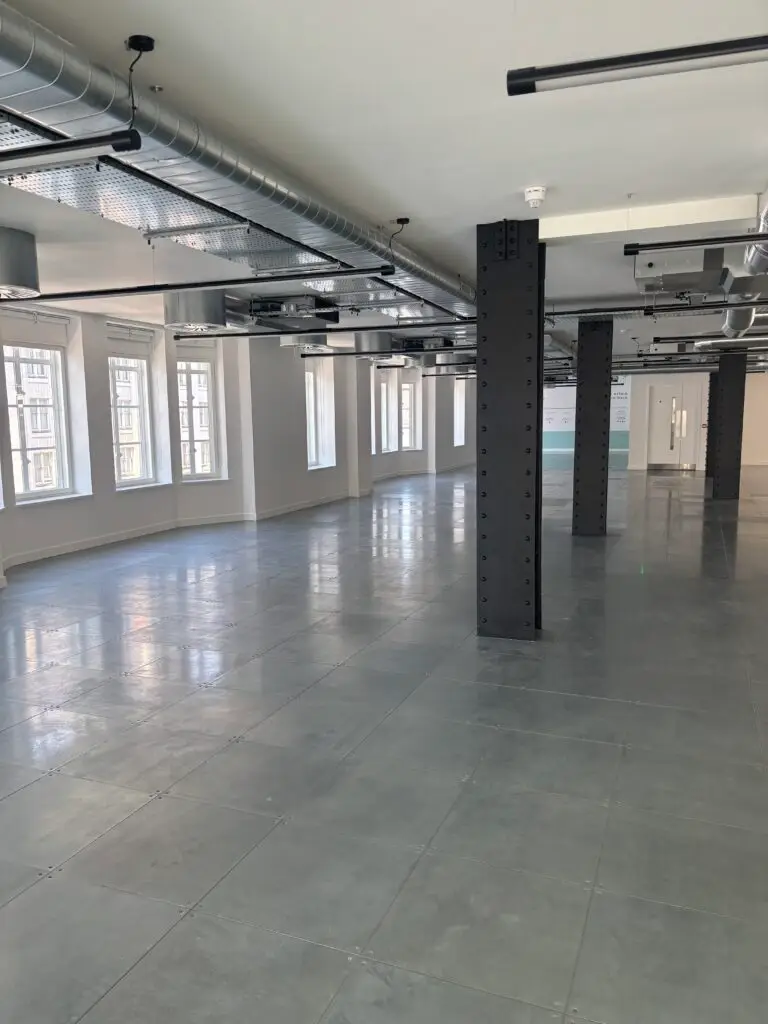
Office dilapidations London are the works required to return a leased office to the condition specified in your lease, normally at the end of the term. For most central London leases that means a Cat A condition: open-plan space, suspended ceilings, raised access floor, painted walls, working M&E, and a clean handover.
Near lease end, your landlord will serve a Schedule of Dilapidations — a line-by-line list of works they say are required to put the building back to that standard. From that point you have two routes:
- Route 1 — Carry out the works yourself, by instructing a specialist dilapidations contractor to physically deliver the strip-out, reinstatement, M&E and redecoration before you hand the keys back. This is almost always the cheaper route.
- Route 2 — Pay the landlord a cash settlement (a “dilapidations claim”) so they can do the works themselves, usually at retail rates plus their own contractor mark-up, professional fees and management costs. This is almost always the more expensive route.
The rest of this guide is built around getting you onto Route 1 with eyes open and a fixed price in front of you.
The Two Routes — and Why One Almost Always Costs More
Most tenants assume a settlement is the easy option. In practice it is the expensive one. Here is why:
- Landlords price at retail. A landlord’s claim is built on a worst-case interpretation of the schedule. It includes their preliminaries, professional fees, contract administration and contractor profit — layers a tenant pays for but never sees.
- You lose control of the spec. Once a settlement is paid, the landlord can spend it however they like — often upgrading the space for the next tenant on your money.
- Specialist contractors price at delivery rates. A dilapidations specialist like London Dilaps prices the same scope at the cost of physically doing it, with no surveyor middlemen and no landlord margin.
- You walk away clean. Works completed and signed off before lease end remove the dilapidations liability entirely — there is nothing left to argue about.
On a typical 5,000 sq ft Central London office, the gap between a landlord’s claim and a contractor-delivered project is regularly £30,000–£60,000. That is the amount tenants leave on the table when they treat settlement as the default option.
Typical Dilapidations Costs in London (2026)
The figures below reflect 2026 London prices for tenant-instructed works delivered by a specialist contractor. Landlord claims for the same scope are typically 20–35% higher than these numbers.
| Office grade | Cost per sq ft | Typical 5,000 sq ft office |
|---|---|---|
| Strip-out only | £3 – £8 | £15,000 – £40,000 |
| Basic strip-out and make-good | £8 – £15 | £40,000 – £75,000 |
| Standard Cat A reinstatement | £15 – £25 | £75,000 – £125,000 |
| High-spec or heavily fitted-out space | Priced after survey | Priced after survey |
Costs depend heavily on the original specification, how heavily the space has been fitted out, building access, programme, and the M&E scope.
Cost Breakdown by Category
Strip-Out Works — £3–£8 per sq ft
Removal of partitions, kitchenettes, branded items, IT cabling, AV, signage and any tenant alterations. Strip-out is also where the biggest landlord-claim inflation tends to sit, because schedules often list “reinstatement” for items that were already there at lease commencement. For a detailed breakdown of strip-out pricing, see our guide to office strip-out costs in London.
Cat A Reinstatement — £15–£25 per sq ft
Returning the space to landlord’s base specification: ceiling tiles and grid replaced, floor boxes refitted, partitions removed, walls and columns made good, and the demise restored to open plan. This is normally the largest line on a dilapidations project.
Mechanical & Electrical Reinstatement — £5–£15 per sq ft
Reconfiguring lighting back to a regular grid, balancing the VAV and heating zones, returning small power and data to base layout, and re-commissioning fire alarm, sprinkler and BMS systems. M&E is the area where DIY mistakes are most expensive — a specialist will price this correctly first time.
Decoration & Finishes — £2–£5 per sq ft
Full repaint of walls and ceilings, touch-up of frames and skirting, replacement of damaged ceiling tiles, and any wall finish reinstatement. Standard practice is two coats of trade emulsion on walls and one on ceilings.
Floor Coverings — £3–£8 per sq ft
Carpet tile replacement (or like-for-like recovery if your lease permits). Premium specifications, carpets bonded directly to the floor, or specialist finishes like rubber or hardwood will sit at the top of the range.
What Affects Your Final Cost
- Original specification. A heavily fitted-out space with bespoke joinery, AV and feature finishes will always cost more to strip out than a plain Cat A office.
- Building rules. Out-of-hours working, restricted lift access and tight loading bay slots can add 10–20% to a London project.
- Programme. Compressed timelines mean weekend and night shifts. Booking eight or more weeks of programme is the single best way to keep costs down.
- Asbestos and surveys. Pre-2000 buildings normally need an R&D asbestos survey before strip-out. Budget £1,500–£3,000.
- M&E complexity. Heavily reconfigured services cost more to put back. Servers, comms rooms and supplementary cooling are common cost drivers.
- Schedule of Dilapidations accuracy. Around 20–30% of items on a typical landlord schedule are inflated, betterment, or outside the tenant’s legal liability. Challenging the schedule is a free lever — always pull it before pricing the works.
How to Reduce Your Dilapidations Bill
There are four levers, in order of how much they save:
1. Instruct Your Own Specialist Contractor (the biggest single saving)
This is the cheapest, fastest and lowest-risk route, and it should be the first option you price. Appointing a specialist dilapidations contractor like London Dilaps to physically deliver the strip-out, Cat A reinstatement, M&E reinstatement and redecoration is typically 20–35% cheaper than paying the landlord’s claim, because you cut out the landlord’s preliminaries, professional fees and contractor mark-up. You set the programme, you control the spec, and you hand the building back in a condition the landlord must legally accept.
On a 5,000 sq ft office that is normally a saving of £30,000–£60,000 versus settling. Send us your Schedule and we will give you a fixed-price quote to do the works, normally within five working days.
2. Challenge the Landlord’s Schedule
Never accept a Schedule of Dilapidations at face value. A specialist contractor (or a building surveyor working with one) will normally identify 20–30% of items that are inflated, items that are betterment, or items that are outside your legal liability under the lease. Removing them shrinks the scope you are pricing against – which makes the contractor route even cheaper. Read more about dilapidations claims that are too high here.
3. Understand the Section 18 Cap
Under Section 18(1) of the Landlord and Tenant Act 1927, the landlord’s damages are capped at the loss in value of the building caused by the disrepair. If the landlord plans to refurbish or redevelop after you leave — which is increasingly common in London — their actual loss may be zero. Section 18 is a powerful argument, but it is most useful as part of a strategy that ends with you instructing the works yourself, not as a route to a settlement.
4. Negotiate a Cash Settlement (Last Resort)
A negotiated settlement should only be on the table if there is genuinely no time left to carry out the works before lease end. Even then, tenants almost always pay more than they would have done by instructing a contractor, because the landlord prices at retail and adds their own margin. If you have eight or more weeks before handover, instructing a specialist contractor is virtually guaranteed to save you money against settling.
How to Budget for Dilapidations
The earlier you engage, the more options you have. A practical timeline:
- 12 months out: re-read your lease, locate the licence for alterations and the original Cat A specification. Form a rough liability estimate using the per-sq-ft ranges above.
- 6–9 months out: appoint a specialist dilapidations contractor for an early site walk-through and budget price. This costs you nothing and gives you a real number to plan against.
- 3–6 months out: once the Schedule of Dilapidations is served, have your contractor price the works against the schedule and identify any inflated or betterment items.
- 8–12 weeks out: lock in your contractor, agree the programme, and start on site. Most London Cat A reinstatement projects need 4–8 weeks on site.
- Lease end: contractor hands the space back, you obtain a sign-off, and the dilapidations liability falls away.
Tenants only end up paying a cash settlement when they leave it too late to execute. Avoid that trap by appointing a contractor early — most will hold a price open through to your lease end if they have visibility on the programme.
Common Cost Mistakes London Tenants Make
- Treating settlement as the default. It is the expensive route, not the easy one.
- Using a general contractor instead of a dilapidations specialist. Generalists lack the experience to price Cat A correctly and routinely come in 25–40% more expensive than specialists — while doing unnecessary work the landlord never asked for.
- Accepting the schedule at face value. Around a fifth to a third of items on a typical landlord schedule are negotiable.
- Leaving it too late. Below eight weeks of programme, your contractor options shrink and prices climb. Below four, you may be forced into a settlement.
- Not getting a contractor price before negotiating. You cannot tell whether a settlement offer is good or bad without knowing what the works actually cost to deliver.
Get a Fixed-Price Quote from London Dilaps
London Dilaps is a specialist dilapidations contractor working exclusively across London. We physically carry out the office strip-out services, Cat A reinstatement, M&E reinstatement and redecoration that the landlords Schedule of Dilapidations requires — we are not a surveyor, broker or middleman.
Send us your Schedule of Dilapidations (or your lease and a few photos if the schedule has not been served yet) and we will give you a free, fixed-price quote to deliver the works, normally within five working days. In almost every case, the quote will come in well below the landlord’s claim figure.
Don’t pay a settlement until you have seen a delivery quote. It is the single most expensive mistake London tenants make at lease end.
FAQs
How much do office dilapidations cost per sq ft in London?
Office dilapidations in London usually cost from £3 per sq ft for strip-out only, £8–£15 per sq ft with basic make-good, and £15–£25 per sq ft for standard Cat A reinstatement. Heavily fitted-out or high-spec space is priced after a survey. The final figure depends on your fit-out, your lease terms and the condition of the space.
How much would dilapidations cost for a 3,000 sq ft office?
For a 3,000 sq ft office, strip-out only is roughly £9,000–£24,000, basic strip-out and make-good £24,000–£45,000, and standard Cat A reinstatement £45,000–£75,000. A space with partitions, raised floors and extensive M&E changes will sit at the top of the range or above it.
What affects the cost of office dilapidations?
The biggest factors are how much fit-out has to be removed, whether the lease requires reinstatement to Cat A, the condition of M&E services, floor coverings and decoration, and access restrictions in the building. Central London buildings with limited working hours, loading bays or lift access usually cost more to work in.
Is it cheaper to do the dilapidation works myself or pay the landlord?
Doing the works yourself with a specialist contractor is usually cheaper than paying a cash settlement. A landlord’s settlement claim is priced at their own contractor’s rates and often includes fees and loss of rent. Doing the works yourself also gives you control over the cost, the programme and the standard of finish.
How much does office strip-out cost in London?
Office strip-out typically costs £3–£8 per sq ft in London as a standalone item. That covers removing partitions, furniture, cabling, and tenant-installed ceilings and floors. The cost rises when the space has a lot of joinery or specialist installations, or when out-of-hours working or complex waste removal is needed.
How much does Cat A reinstatement cost?
Standard Cat A reinstatement typically costs £15–£25 per sq ft. It returns the space to a basic landlord specification: exposed or suspended ceilings, raised floors, standard lighting and working M&E, ready for the next tenant.
Can a landlord claim more than the actual cost of the damage?
No. Under Section 18(1) of the Landlord and Tenant Act 1927, a landlord’s damages for disrepair are capped at the amount the property’s value has fallen because of it. If the landlord plans to refurbish or redevelop anyway, the valid claim may be much lower than the schedule of dilapidations suggests.
When should I start planning for dilapidations?
Start 6–12 months before your lease ends. That leaves time to review your lease obligations, get a contractor’s costing, negotiate with the landlord and complete the works before the lease end date. If you start late, you may have to accept the landlord’s cash settlement instead of controlling the cost yourself.