
Lease-End Planning — How to Prepare Your Office for Handover
A London office handover is a project, not an event. Between dilapidations liability, reinstatement works, the building manager’s permit regime and the landlord’s surveyor on the day, what looks from a distance like “hand back the keys” is in practice a six- to twelve-month sequence of decisions, procurement and physical works. Treat it that way and the handover closes cleanly. Leave it to chance and the costs run away, the landlord’s contractor finishes the job at a steep mark-up, and the conversation drags on for months.
This guide is written for commercial tenants planning a lease-end handover anywhere in London — from a single floor in Shoreditch to a tower-block headquarters in Canary Wharf. It walks through what to do at each stage, the costs to benchmark against, and the decisions that determine whether you exit with a clean handover or an open-ended dispute.
Why Lease-End Planning Matters More Than Tenants Expect
Two forces drive the timeline. The lease sets the legal obligation to return the premises in a defined state — usually full reinstatement of any tenant alterations and, depending on the clauses, a Category A condition. The building sets the access windows, out-of-hours rules, goods-lift slots and waste-removal protocols that every contractor on site has to work around. The lease tells you what; the building tells you when.
Tenants who treat handover as a final-month task tend to discover both at once. Three months from lease expiry is too late to scope the works, run a competitive procurement, book specialist contractors and complete physical works inside the building’s permit windows. At that point, the only options are the landlord’s contractor at a 30 to 50 per cent premium or a hurried cash settlement that leaves the matter open. Plan early and the choices stay with you; plan late and the choices belong to the landlord.
What a London Office Handover Typically Costs
Across the projects we deliver, full end-of-lease works for a London office come in at roughly £15 to £35 per square foot, depending on the original fit-out, the building, and whether full Category A reinstatement is required. For a 5,000 sq ft floor in the City or Canary Wharf, that is a working range of £75,000 to £175,000 to physically complete the works.
Two figures to keep in mind when comparing that range to a landlord’s proposed cash settlement:
- Landlord settlement figures are routinely padded with contingency, supervisor fees, an administrative uplift and, often, a loss-of-rent allowance for the period the landlord’s contractor would notionally be on site. Strip these out and the underlying works number is materially lower.
- Tenants who procure works directly through a specialist contractor typically pay 20 to 50 per cent less than the landlord’s chosen contractor would charge. That mark-up is the largest single hidden cost in most dilapidations disputes.
In practice the question is rarely “settle or pay for the works.” It is “pay an inflated cash figure now, or complete the works at trade rates and walk away clean.” The numbers almost always favour the second route.
A Stage-by-Stage Lease-End Plan
Use the stages below as a working framework. Adjust them to your lease length, your premises and the building you are in, but resist the temptation to compress the front end. Most lease-end pain comes from late starts.
12 Months Before Lease Expiry: Build the Brief
Pull out the lease, every licence for alterations, and any schedule of condition that was lodged at the start of the term. Read the repair, decoration, reinstatement and yielding-up clauses carefully. If anything is ambiguous, get a surveyor or solicitor to interpret it now rather than later.
Commission a pre-termination survey from an independent building surveyor. This is the single most valuable action you can take a year out. A specialist will walk the floor, compare it to the licences and schedule of condition, and give you a realistic estimate of the works required and the likely cost. It turns a vague liability into a planning number.
If you intend to break or leave at expiry, confirm the notice mechanics in the lease and diarise the deadlines. Break clauses are unforgiving — a single missed condition can invalidate the break and lock you into another full term.
9 Months Before: Procure the Works
The London market for specialist dilapidations contractors gets busy around the common lease-end dates of 25 March, 24 June, 29 September and 25 December. Start procurement now. Invite at least three specialist contractors to price the works against a single written scope so the bids are comparable — variations in assumptions about ceiling removal, floor box reinstatement or partition demolition can produce wildly different numbers from the same brief.
If you are moving to new premises, sequence the decant carefully. Six to eight weeks of overlap between buildings is usually about right for a single floor; a tower-block tenant should plan for longer.
6 Months Before: Appoint and Engage
Sign the contract with your chosen specialist and confirm insurance, method statements, RAMS and waste carrier licensing. A good contractor will start coordinating with building management on access, lift bookings, out-of-hours working and waste egress before they mobilise.
Open a dialogue with the landlord. The right framing is “we are completing the works and would like to align with your handover requirements,” not “we are seeking to settle.” Keeping the works route open while you talk preserves your leverage. In parallel, begin asset disposal — furniture, IT, server racks and loose items all need to clear before strip-out can begin.
3 Months Before: Strip-Out and Reinstatement
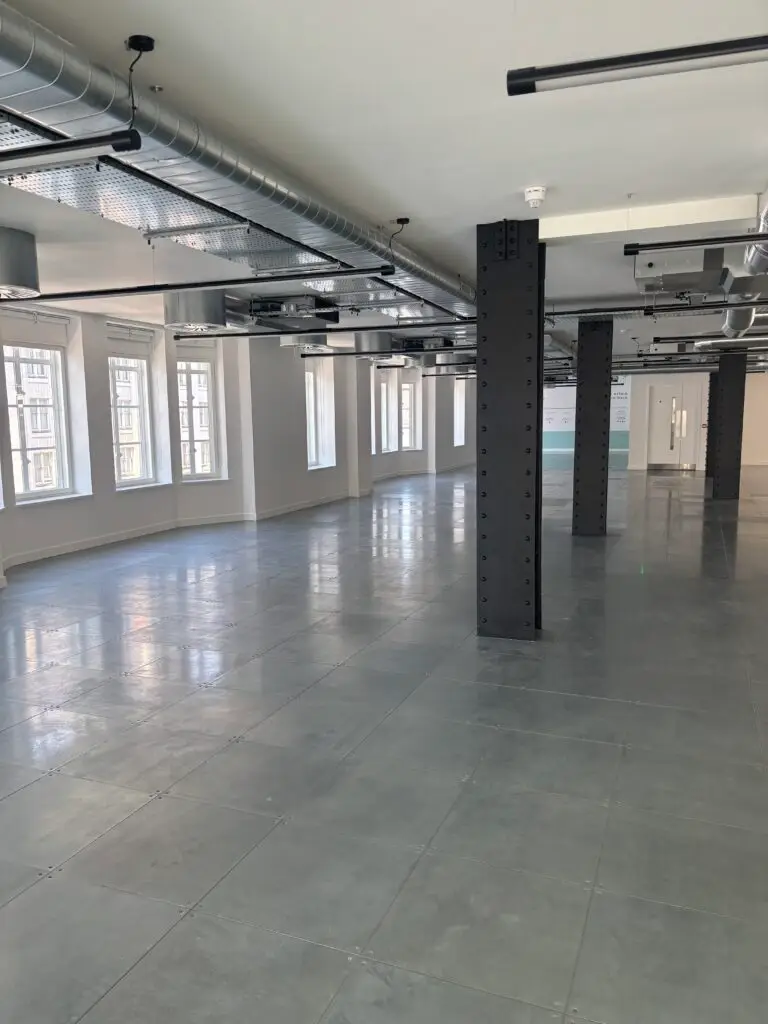
Physical works run in this window. Strip-out comes first — partitions, ceilings, tenant-installed cabling, kitchenettes, server rooms, signage and any non-original fit-out elements. Reinstatement follows: ceiling tiles, lighting grid, raised access floor, carpet tiles, paint, blinds, fire detection and HVAC make-good. A specialist contractor will programme the works around the building’s permit regime and lift availability, so floors finish in the right order and skips clear without blocking common parts.
Final Month: Cleaning, Snagging and Sign-Off
Once reinstatement is complete, the floor needs a deep end-of-lease clean and a snag-and-fix walk. The landlord’s surveyor will inspect against the lease and licence for alterations. On the day of handover, you are looking for a written sign-off from the landlord or their surveyor. That document is the close of your dilapidations liability — until you have it, the matter is open.
The Workstreams You Are Coordinating
A handover is several workstreams running in parallel. The main ones, and what they involve, are summarised below.
|
Workstream |
What it covers |
|
Strip-out |
Removing tenant-installed partitions, ceilings, kitchenettes, server rooms, signage, cabling and any non-original fit-out elements. |
|
Cat A reinstatement |
Returning the floor to a landlord-ready Category A specification — ceiling grid and tiles, lighting, raised access floor, carpet, paint, blinds, basic HVAC. |
|
Make-good works |
Repairing wear, tear and damage identified in the schedule of dilapidations — patch-painting, floor box reinstatement, door frames, glazing repairs. |
|
End-of-lease cleaning |
Deep clean of the entire demise — floors, internal glass, kitchens, WCs, ducts, plant rooms — to commercial handover standard. |
|
Asset disposal |
Removal of furniture, IT, server racks and waste with proper carrier licensing and ESG-compliant resale, donation or recycling. |
|
Compliance |
Asbestos checks, fire compartmentation reinstatement, electrical certification, PAT, gas isolation and any landlord-specific compliance documents. |
|
Handover documentation |
O&M manuals, certificates, photos, access keys, alarm codes, parking passes — assembled into a single handover pack for the landlord. |
Most of these sit on the contractor’s side. A specialist office strip-out and reinstatement contractor will run them as a single coordinated programme rather than as separate trades you have to manage yourself.
London-Specific Constraints to Plan For
A London handover is materially different from one in a regional business park. The buildings are denser, the access is tighter, and the building managers’ rules are stricter. A handful of constraints come up on almost every project.
Tower-block buildings — including most of Canary Wharf, much of the City and large parts of the Southbank — operate booked goods-lift slots, banksman protocols, strict out-of-hours working windows, and permit regimes for trades. Mobilisation is slower, waste egress is rationed, and night and weekend shifts are often the only way to deliver inside the building’s rules. Add two to four weeks to the programme for these buildings as a baseline.
Listed and period buildings — common across Mayfair, Fitzrovia and parts of the City of London — bring their own variables: timber floors, narrow stair cores, listed plasterwork, sash windows and sequencing constraints that can extend strip-out even when the overall scope is modest.
Tech and creative-cluster buildings in Shoreditch, Old Street and Clerkenwell are typically more flexible on access, but the prevalence of bespoke fit-outs — exposed ceilings, polished concrete, bespoke joinery, server rooms — makes the strip-out scope larger than the floorplate alone would suggest.
Whatever the building, the time to discover its rules is at procurement, not on the first morning of works.
Why a Completed Handover Beats a Cash Settlement
Three things separate a completed handover from a cash settlement, and all three matter financially.
Control. When you complete the works, you keep control of specification, quality and programme. You choose the contractor, the materials and the sequencing. Once you pay a settlement, control transfers to the landlord — who, in many cases, will not even carry out the works. You will have paid for an outcome you have no input into.
Closure. A signed-off handover ends the matter definitively. The schedule of dilapidations falls away because the physical works are done and inspected. A cash settlement does not close anything in the same way — if the landlord later identifies further losses, lost rent during a void or additional remedials, the conversation can be reopened. Completed works cannot.
Cost. Settlement figures are built on the landlord’s surveyor’s pricing assumptions, with contingency and supervisor fees layered on top. Direct procurement through a specialist contractor strips those layers out. The gap between the two — usually 20 to 50 per cent — is your saving.
There are situations where settlement is the right answer — a landlord refurbishing the floor anyway, a very short residual term, an unusual lease structure — but these are exceptions. For most London commercial tenants, completing the works is the lower-cost, lower-risk, cleaner route, and lease-end planning should default to it.
Your Next Step: A Free On-Site Assessment
London Dilaps Ltd delivers full end-of-lease strip-out, Cat A reinstatement, make-good works and end-of-lease cleaning across every London postcode. We hold £5m Public Liability and Employers’ Liability insurance, work nights and weekends around building-manager restrictions, and are equally at home on a single 3,000 sq ft floor in Shoreditch or a 30,000 sq ft headquarters in the City of London or Canary Wharf.
If you are six to twelve months out from lease expiry, or your schedule of dilapidations has just landed, we will walk the floor with you and produce a line-by-line estimate at no cost. Most tenants find the true cost of works comes in well below the landlord’s schedule figure, and that gap is your saving.
Ready to start? Contact London Dilaps for a free assessment and take control of your office handover on the front foot.
Further Reading on londondilaps.com
Office Strip-Out Services in London
Office Dilapidations in the City of London