
What Are Office Dilapidations?
Dilapidations is one of those commercial-property words that almost everyone has heard and very few people can define cleanly. It turns up in lease meetings, in conversations with agents, on the last page of a quarterly cost review — and then, with a jolt, in a thick document from the landlord’s surveyor twelve months before the office is due to be handed back. This guide answers the basic question — what are office dilapidations? — and sets out what the term means in practice for London commercial tenants, how the process works, what it typically costs, and why completing the physical works is almost always a better outcome than paying a cash settlement.
The One-Sentence Definition
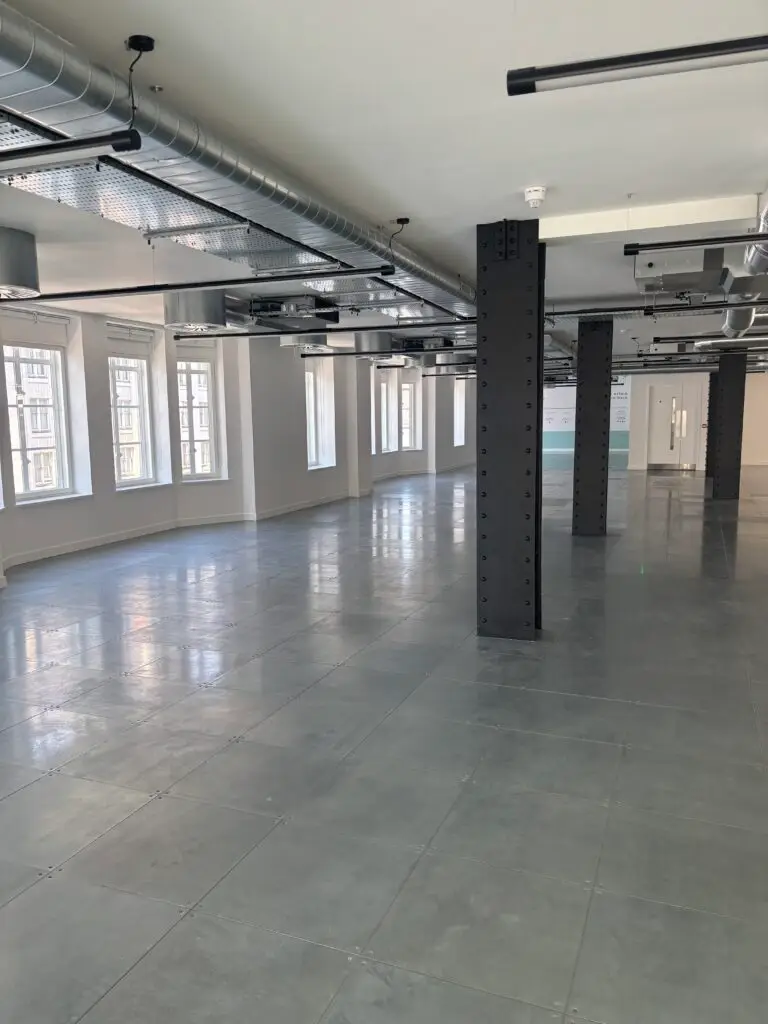
Office dilapidations are the works required to return a leased commercial property to the condition the lease requires at the end of the term — usually, that means stripping out the tenant’s fit-out and reinstating the landlord’s original Category A specification.
That single sentence conceals quite a lot. Almost every word in it is defined somewhere in the lease, in a licence for alterations, in a schedule of condition or in the schedule of dilapidations itself. Understanding which document drives which obligation is the first step to handling a lease-end competently, and it is where most tenants — particularly those approaching their first commercial lease-end — lose ground.
What the Lease Actually Says
Every commercial office lease contains a repairing clause and a yield-up clause. Between them, these two clauses define what state the premises must be in when the lease ends.
The repairing clause governs the condition of the space throughout the term — walls, floors, services, finishes. The yield-up clause governs the handover condition at the end of the term, and usually requires the tenant to return the premises in at least the same condition they were delivered in, with any alterations reversed unless the landlord specifically requests they remain. Together, these clauses create what surveyors call the tenant’s dilapidations liability.
The Three Documents That Define Your Liability
1. The Lease
The lease is the primary document. Read the repairing and yield-up clauses carefully — they set the baseline standard. Leases on older buildings or on floors taken in shell condition can impose materially different obligations from leases on modern Cat A fit-outs.
2. The Licence for Alterations
Where the tenant has installed its own Category B fit-out — partitions, glazed screens, kitchens, branded reception — the landlord will almost always have issued a licence for alterations. The licence usually includes a reinstatement clause requiring the tenant to remove those alterations at lease end. The exact wording of that clause controls what has to come out and what can stay.
3. The Schedule of Condition
If the tenant took the space at less than Cat A — for example, an existing fit-out left by the previous occupier — a photographic schedule of condition will have been annexed to the lease. That schedule captures the condition of the premises at the start of the term, and it caps the tenant’s handover obligation at that standard. Where a schedule of condition exists, it is one of the most valuable documents in the tenant’s file.
The Schedule of Dilapidations
Typically six to twelve months before lease end, the landlord’s surveyor will issue a terminal schedule of dilapidations. This is a line-by-line document setting out exactly what needs reinstating, repairing or replacing to bring the premises back to the required condition, along with a cash figure attached to each item.
The schedule is not a bill. It is an opening position drawn from the lease, the licence and the schedule of condition. It is routinely prepared with cost assumptions that favour the landlord — contingency, supervisor fees, administrative uplift, a loss-of-rent allowance during the works. The tenant’s job is not to argue the figure down one item at a time; the tenant’s job is to price and book the physical works, deliver them before lease end, and close the liability on handover.
What “Reinstatement” Means in Practice
For a typical central London office, reinstating a Cat B fit-out back to Cat A usually involves:
- Removing all tenant partitions, glazed screens and meeting-room pods
- Stripping out tenant-installed kitchens, tea-points and feature joinery
- Removing tenant carpets and replacing with landlord-spec carpet tiles
- Realigning the suspended ceiling grid and replacing missing or damaged tiles
- Removing tenant data cabling, floor boxes and small-power runs
- Returning lighting to the landlord-specified layout
- Redecorating the entire floor to a neutral Cat A standard
- A full end-of-lease clean, leaving the space handover-ready
The works are physical, time-sequenced and best carried out by a specialist contractor working nights and weekends around building-manager access restrictions.
When Do Dilapidations Actually Happen?
In practice, a well-run dilapidations programme runs for twelve to eighteen months in total. Reviewing the lease and scoping the works begins eighteen to twelve months before expiry. The landlord’s schedule typically arrives nine to six months out. Works go on site three to six months before handover, and the final sign-off walkaround takes place in the weeks immediately before the tenant vacates. Tenants who begin inside the last three months almost always end up paying a premium — either through a rushed site programme or a landlord-padded settlement.
What Do London Office Dilapidations Cost?
Total cost depends on the size of the floor, the scale of the Cat B fit-out being removed, and the complexity of the building. As a planning benchmark for central London, expect £15 to £35 per sq ft for a full dilapidations package — strip-out, Cat A reinstatement, decorations and end-of-lease clean combined. Premium buildings in Canary Wharf, the City, Mayfair and on listed period sites push toward the upper end.
Direct-to-contractor rates consistently beat the landlord’s contractor rates by 20 to 50 per cent, because the tenant pays trade rates rather than landlord-contractor rates with contingency, supervisor fees, administrative uplift and a lost-rent allowance stacked on top. On a 10,000 sq ft floor, that saving typically runs into six figures.
Completing the Works vs Settling in Cash
When the schedule lands, tenants are often given the option of settling the works in cash rather than physically delivering them. The settlement route sounds simpler — no site programme, no night works, no surveyor walkarounds. In practice, it is rarely the cheaper or cleaner option.
A cash figure does not oblige the landlord to actually do the works. If further losses later crystallise — voids, additional building remedials, surveyor’s fees — the conversation can be reopened. Completed works cannot. When a specialist contractor hands back a signed-off Cat A floor, the liability is extinguished that day. Tenants also retain control of specification, quality and programme throughout the works — three things that disappear the moment a settlement is agreed.
Common Misconceptions About Office Dilapidations
Three myths come up repeatedly in conversations with London tenants. The first is that the schedule of dilapidations is a bill — it is not; it is an opening scope document. The second is that the landlord will not really enforce reinstatement — they will, and they have contractors on retainer to do it at the tenant’s cost if the physical works are not delivered. The third is that dilapidations only matter at lease end — in fact, the cheapest lease-ends are planned twelve to eighteen months before expiry, because that is when you still have competitive tension with the supply chain and time to complete the works on your own terms.
Your Next Step: A Free On-Site Assessment
London Dilaps Ltd delivers end-of-lease strip-out, Cat A reinstatement, make-good works and end-of-lease cleaning across every London postcode. We hold £5m Public Liability and Employers’ Liability insurance, work nights and weekends around building-manager restrictions, and are equally at home on a 3,000 sq ft floor in Shoreditch or a 30,000 sq ft tower floor in the City or Canary Wharf.
If you have received a schedule of dilapidations — or you are six to twelve months out from lease expiry and want to scope the works early — we will walk the floor with you and produce a line-by-line estimate at no cost. Most tenants find the true cost of the works comes in significantly below the landlord’s schedule figure, and the gap is your saving.
Ready to start? Contact London Dilaps for a free assessment and take control of your lease-end on the front foot.
Further reading on londondilaps.com
Office Strip-Out Services in London