
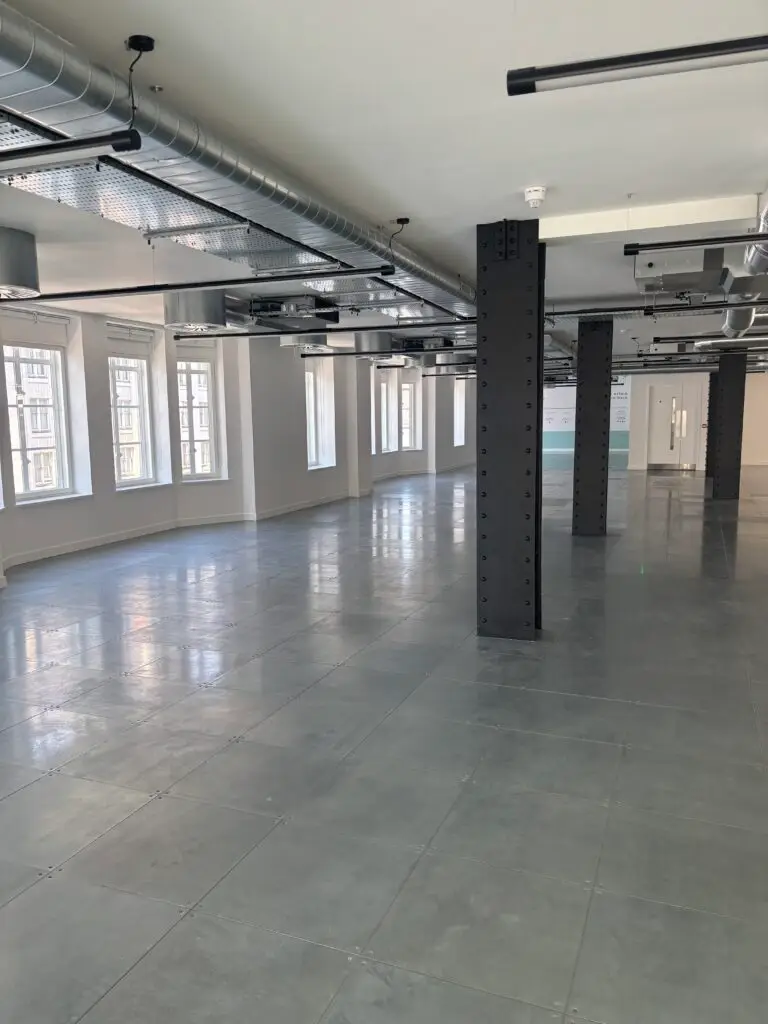
How Much Do Office Dilapidations Cost in London?
One of the most common questions we hear from London tenants approaching the end of their lease is simple: how much are office dilapidations going to cost me?
It’s a fair question — and one that rarely gets a straight answer. Dilapidations costs can vary significantly depending on the size of the office, the condition it’s in, what the lease requires, and how much of the original fit-out needs to be stripped back or reinstated.
At London Dilaps Ltd, we deliver office dilapidations projects across London every week, so we have a clear picture of what tenants are actually paying in 2026. In this guide, we’ll break down the typical costs involved, explain what influences the final figure, and share practical advice on how to keep your dilapidations spend under control.
What Do Office Dilapidations Actually Include?
Before looking at costs, it helps to understand what you’re paying for. Office dilapidations typically cover all the works needed to return a leased space to the condition required under your lease. For most London offices, this means:
- Strip-out works — removing partitions, suspended ceilings, raised flooring, kitchen units, cabling, and any other tenant-installed elements
- CAT A reinstatement — restoring the space to its original base-build specification, including ceilings, lighting, floor finishes, power, and decoration
- Repairs and make-good — fixing any damage beyond fair wear and tear, such as holes in walls, damaged flooring, or faulty M&E systems
- Decoration — repainting walls and ceilings to a neutral, landlord-approved finish
- End-of-lease cleaning — a professional deep clean to bring the space up to handover standard
Not every project requires all of these elements. A tenant in a small serviced office with minimal alterations may only need cleaning and minor repairs. A business vacating a heavily fitted-out multi-floor space may need a full CAT A reinstatement programme.
Typical Office Dilapidations Costs in London
While every project is different, the following ranges reflect what we typically see across our London projects in 2026:
Light-touch dilapidations (minor repairs, decoration, cleaning): £8–£15 per sq ft
This applies to offices where the tenant has made few or no alterations. The space may need repainting, minor patching, a deep clean, and perhaps some carpet replacement. These are common for smaller offices or shorter leases where the fit-out was inherited from the landlord or a previous tenant.
Standard dilapidations (strip-out, make-good, decoration): £15–£30 per sq ft
This covers the majority of London office dilapidations projects. The tenant has installed partitions, a kitchen or tea point, meeting rooms, or additional cabling, and these need to be removed. The space then needs to be made good and redecorated to a reasonable standard. Most SME tenants occupying fitted-out offices in London will fall into this range.
Full CAT A reinstatement (complete strip-out and reinstatement to base-build): £30–£55+ per sq ft
This is required where the lease demands a full return to CAT A specification. It includes a complete soft strip, new or restored suspended ceilings, new carpet tiles or raised access flooring, lighting replacement or refurbishment, redecoration, and M&E works. Costs at the higher end typically involve older buildings, complex M&E systems, or spaces where significant structural alterations were made.
These are guide figures. Actual costs will depend on the specific requirements of your lease and the condition of the space.
What Drives Dilapidations Costs Up?
Understanding what pushes costs higher can help you plan ahead and avoid surprises. The main factors we see driving up dilapidations costs in London are:
Scope of the lease obligations. The single biggest cost driver is what your lease actually requires. A lease that demands full CAT A reinstatement is inherently more expensive to comply with than one that only requires make-good and redecoration. This is why reviewing your lease early — ideally 9 to 12 months before expiry — is so important.
Extent of tenant alterations. The more you’ve changed the space, the more it costs to put it back. Heavy partitioning, bespoke joinery, mezzanine floors, supplementary cooling, and extensive IT cabling all add to the strip-out scope and, therefore, the cost.
Building access and logistics. Central London offices often come with restricted working hours, limited goods lift access, and tight loading bays. All of these increase labour time and cost. A basement office in the City with no direct street access will cost more to strip out than a ground-floor unit in a suburban business park.
Condition of the space. If the office has been well-maintained throughout the lease, the make-good element will be minimal. If it hasn’t — cracked ceiling tiles, stained carpets, damaged walls, neglected M&E — repair costs will add up quickly.
Timing and urgency. Leaving dilapidations to the last minute is one of the most expensive mistakes a tenant can make. Rushed projects mean premium labour rates, less time to negotiate with the landlord, and no opportunity to plan works efficiently. Planning ahead almost always saves money.
Landlord expectations and surveyor involvement. Some landlords and their surveyors take an aggressive approach to dilapidations, insisting on specifications that exceed what the lease actually requires. Without professional advice, tenants can end up paying for works they didn’t need to do.
How to Reduce Your Office Dilapidations Costs
The good news is that there are several practical steps you can take to manage and reduce your dilapidations liability:
Start early. We recommend tenants begin planning their lease exit at least 6 to 9 months before lease expiry. This gives you time to review your obligations, get competitive quotes, schedule works during quieter periods, and avoid the premium costs that come with last-minute projects.
Review your lease properly. Not everything a landlord asks for is necessarily required under the lease. A detailed lease review — ideally carried out with your solicitor or a specialist dilapidations advisor — can identify items that can be challenged or excluded, potentially saving thousands of pounds.
Carry out the works yourself. Tenants who appoint their own dilapidations contractor and complete the works directly almost always spend less than those who agree to a financial settlement with the landlord. When you control the project, you choose the contractor, manage the scope, and avoid the landlord’s margin and contingency costs.
Get a fixed-price quote. A clear, fixed-price proposal from a specialist contractor removes uncertainty and protects your budget. At London Dilaps Ltd, we provide fully itemised, fixed-price quotations so tenants know exactly what they’ll pay before any work begins.
Challenge the schedule of dilapidations. If you’ve received a schedule of dilapidations from your landlord, don’t accept it at face value. Many schedules include inflated costs, works that aren’t required under the lease, or items that fall under fair wear and tear. A professional review can significantly reduce your exposure.
Consider the landlord’s intentions. Under Section 18 of the Landlord and Tenant Act 1927, a landlord’s dilapidations claim can be capped if they intend to demolish or substantially refurbish the building. If your landlord has plans to redevelop or carry out a major refit, your liability may be significantly reduced — or eliminated entirely.
Settlement vs. Completing the Works: Which Costs Less?
This is a question we get asked regularly, and the answer in our experience is clear: completing the works yourself is almost always cheaper than paying a financial settlement.
When a landlord proposes a settlement figure, it typically includes not just the cost of the physical works, but also professional fees, management charges, contingency allowances, and sometimes loss of rent. These can add 20% to 40% on top of the actual reinstatement cost.
By appointing your own contractor and managing the programme directly, you eliminate these overheads. You also retain control over the quality of the works and the timeline for completion, which reduces the risk of disputes at handover.
That said, there are situations where a negotiated settlement makes sense — for example, if the landlord intends to refurbish regardless, or if the lease end is imminent and there isn’t time to complete the works. The key is to make the decision based on professional advice, not pressure.
Why Accurate Costing Matters
One of the risks tenants face is receiving a dilapidations cost estimate that’s either too low (leading to budget shortfalls mid-project) or too high (causing unnecessary panic or overpayment on a settlement).
At London Dilaps Ltd, we provide detailed, transparent cost assessments based on a physical survey of the space. We break down every element of the works — strip-out, reinstatement, decoration, cleaning, waste removal — so you can see exactly where your money is going and make informed decisions about how to proceed.
Get a Clear Picture of Your Dilapidations Costs
If your lease is approaching its end and you want to understand what your office dilapidations are likely to cost, we can help. London Dilaps Ltd provides free, no-obligation site assessments and fixed-price quotations for tenants across London.
Contact us today to arrange a site visit and get a clear, honest picture of your dilapidations liability — before the landlord’s surveyor gives you theirs.