
Last updated:
End-of-Lease Cleaning and Make-Good Works: What Landlords Expect in London Offices
This guide sets out what London landlords typically expect when you vacate, where tenants most often slip up, and how to manage the process before the surveyor’s letter lands on your desk.
Cleaning is not the same as making good
End-of-lease cleaning is the surface-level handover: deep clean of carpets, windows, kitchens, washrooms, and shared areas; rubbish removal; and the building left presentable. It is what most tenants picture when they think about handing keys back. Cleaning comes after the strip-out; our office strip-out checklist for London tenants shows what should be cleared first.
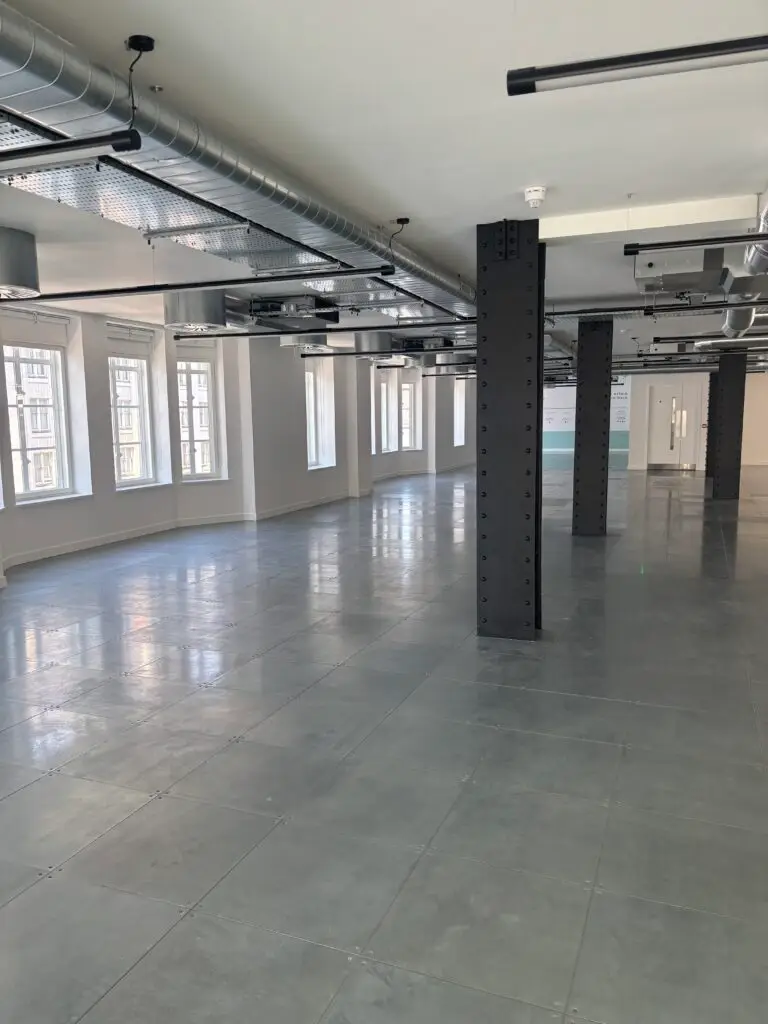
Make-good — more formally known as dilapidations or reinstatement works — is a contractual obligation. It is the physical work required to return the premises to the condition demanded by your lease. That usually means stripping out fit-out you installed, reinstating partitions or ceilings you altered, repairing wear and tear beyond what is reasonable, and redecorating to the standard the lease specifies.
A spotless office that still has your branded reception desk, bespoke meeting room glazing, and rewired comms cabinet will not satisfy a make-good clause. The two workstreams need to run in parallel, with cleaning as the final step after the make-good works are complete.
What “yielding up” actually requires
Almost every commercial lease contains a “yielding up” clause that obliges the tenant to return the premises in a particular state at lease expiry. The exact wording matters. Typical obligations include:
Repair — putting the premises back into the state required by the repairing covenant, which is often “good and substantial repair” regardless of the condition at the start of the lease, unless a Schedule of Condition was annexed.
Reinstatement — removing alterations carried out during the term (your CAT B fit-out, additional partitioning, kitchenettes, server rooms, signage) and reinstating the landlord’s original CAT A specification.
Decoration — repainting and refinishing in the final year of the term, typically to a specification approved by the landlord’s surveyor.
Compliance — leaving statutory documentation in order, including asbestos registers, electrical test certificates, gas safety, and any planning consents tied to alterations.
Reading these clauses carefully — ideally 18 to 24 months before lease end — is the single most valuable thing a tenant can do. Most disputes arise because tenants underestimate what they signed up to years earlier.
The Schedule of Dilapidations
Landlords formalise their make-good claim through a Schedule of Dilapidations, prepared by a building surveyor. A Terminal Schedule is served at or near lease end and lists every alleged breach: items in disrepair, alterations to be reinstated, decoration outstanding, and the landlord’s costed remedy for each.
Schedules are often heavily front-loaded. It is common to see claims that include like-for-like replacement where repair would suffice, full reinstatement of items the landlord intends to remove anyway, and professional fees that bear little relation to the actual scope of work. A tenant who accepts the schedule at face value will overpay.
The proper response is to instruct your own building surveyor to review the schedule line by line, agree what is genuinely owed, challenge what is not, and negotiate a settlement — either in works or in cash.
Section 18(1): the cap most tenants forget
Section 18(1) of the Landlord and Tenant Act 1927 places a statutory cap on dilapidations damages. The landlord cannot recover more than the diminution in the value of their reversion — broadly, the difference between the building’s value with the breaches and its value if the work had been done.
Two scenarios commonly trigger Section 18(1) relief:
If the landlord is going to refurbish, redevelop, or demolish the premises anyway, any work the tenant would have done is superseded. The landlord has suffered no loss, and the claim collapses.
If the local market would absorb the premises in their current condition at a similar rent, the diminution is minimal.
A diminution valuation by a chartered surveyor is often the single largest lever a tenant has in dilapidations negotiations. In London’s current office market — with significant CAT A and CAT B refits triggered by occupier demand for higher-spec space — Section 18(1) arguments are landing more often than they did five years ago.
Where tenants most often slip up
Leaving it too late. Make-good scopes can take months to procure and deliver. Tenants who start in the final eight weeks pay premium rates and lose negotiating leverage.
Treating the schedule as a bill. The schedule is the opening position in a negotiation, not an invoice. Paying it without challenge transfers value to the landlord that was never owed.
Forgetting alterations consents. Works carried out without a properly documented Licence to Alter create reinstatement risk even if the landlord knew about them informally.
Mixing cleaning contractors and make-good contractors. Cleaning firms are not equipped to strip out partitions, lift floor boxes, or make good ceiling grids. The cost difference between a coordinated principal contractor and a patchwork of trades is significant.
Overlooking the condition report. If a Schedule of Condition was annexed to the lease, the tenant’s repair obligation is capped at that baseline. Many tenants discover the document exists only after the schedule has been agreed.
A practical timeline
A workable approach for a London office tenant is to begin reviewing the lease and any alterations records at least eighteen months before expiry, instruct a building surveyor twelve months out to walk the premises and forecast likely exposure, engage with the landlord nine to six months before expiry to test appetite for a financial settlement in lieu of works, and finalise either the works programme or a settlement figure no later than three months before the term date. Cleaning is scheduled last, immediately before handover.
Getting the right advice early
End-of-lease dilapidations are one of the few areas of commercial property where early specialist advice almost always pays for itself many times over. The gap between a landlord’s opening schedule and the figure a properly advised tenant ultimately pays is routinely fifty per cent or more.
If you have a London office lease approaching its term — or you have just received a Schedule of Dilapidations and are not sure what to do with it — London Dilaps acts exclusively for tenants. We review the schedule, value the claim against Section 18(1), and negotiate the settlement or manage the make-good works on your behalf. Get in touch for a no-obligation review of your position.